Introduction
Bolivia’s artistic heritage is a remarkable journey through thousands of years of human creativity, cultural exchange, and spiritual expression. Nestled in the heart of South America, the country possesses one of the continent’s richest artistic traditions, shaped by ancient civilizations, Indigenous cultures, colonial influences, and modern artistic movements.
Whether one takes the time to admire the stone statues created by the Tiwanaku civilization or simply observe the murals decorating buildings across the urban centers of present-day Bolivia, there are few countries in the world where one could witness such a long evolution of art while retaining their cultural identity.
In essence, Bolivian art represents a fascinating combination of ancestral and modern artistry, and provides insight into the connections between art and identity.
Due to my interest in sculpture and world art, I find Bolivia particularly fascinating because its artistic history spans thousands of years, yet many of its greatest achievements remain relatively unknown outside South America. The country’s stone monoliths, murals, and Indigenous artistic traditions demonstrate how art can preserve cultural identity across generations.
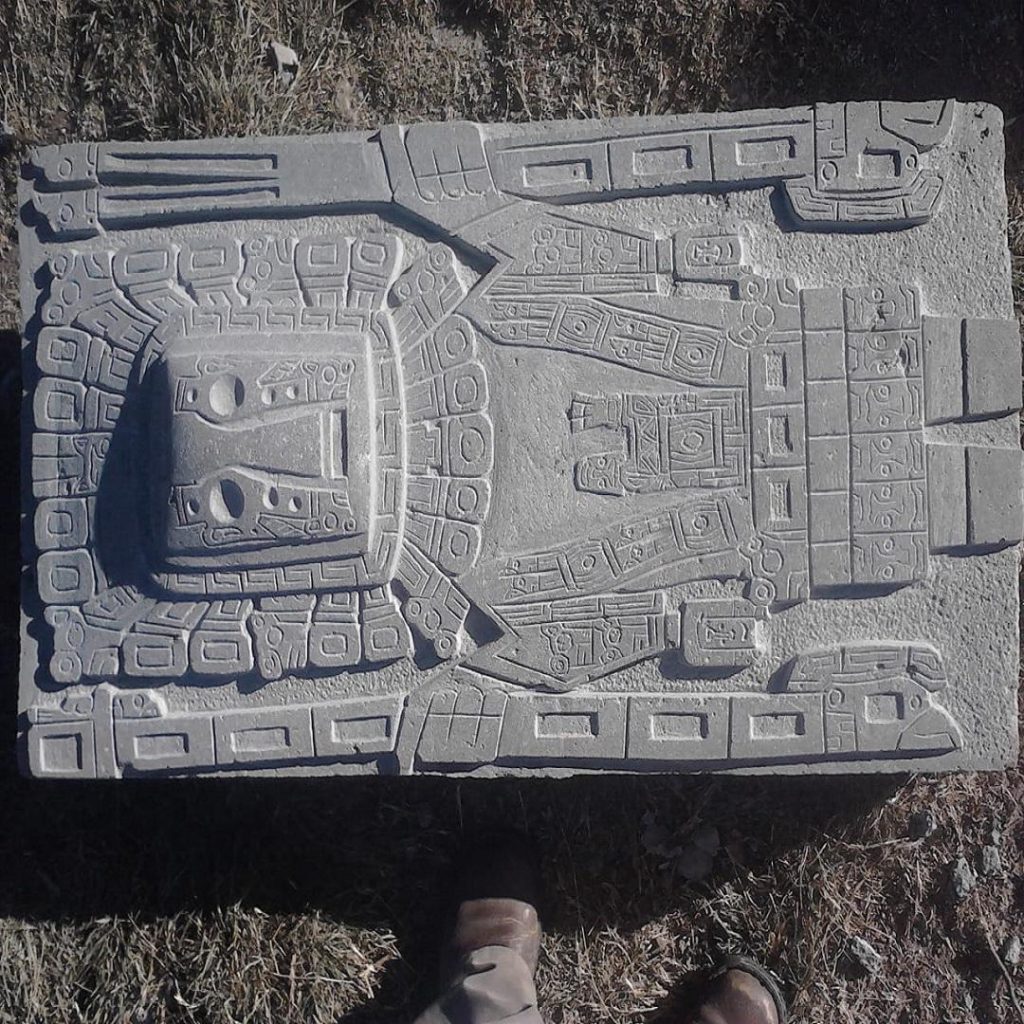
The Tiwanaku civilization laid the foundation for Bolivia’s artistic heritage through monumental stone sculpture and architecture.
The Foundations of Bolivian Art: The Tiwanaku Civilization
Long before the rise of the Inca Empire, the Tiwanaku culture thrived on the southern shores of Lake Titicaca. From about 500 to 1000 C.E., Tiwanaku had become one of the most significant centers of culture and politics in the Andes.
The artworks of the culture are considered some of Bolivia’s most precious cultural heritages. Stonemasons made enormous monoliths, ceremonial entrances, and buildings that continue to captivate researchers and visitors today.
Among the civilization’s most celebrated artistic achievements is the Gateway of the Sun, which is a massive construction carved from an andesite block. The geometric patterns and religious symbols that decorate the construction show the skills of Tiwanaku artists.
Some other great examples are the Bennett Monolith and the Ponce Monolith, two gigantic stone statues covered with numerous engravings, probably representing spiritual or political personalities of that time.
Indigenous Traditions and Artistic Identity
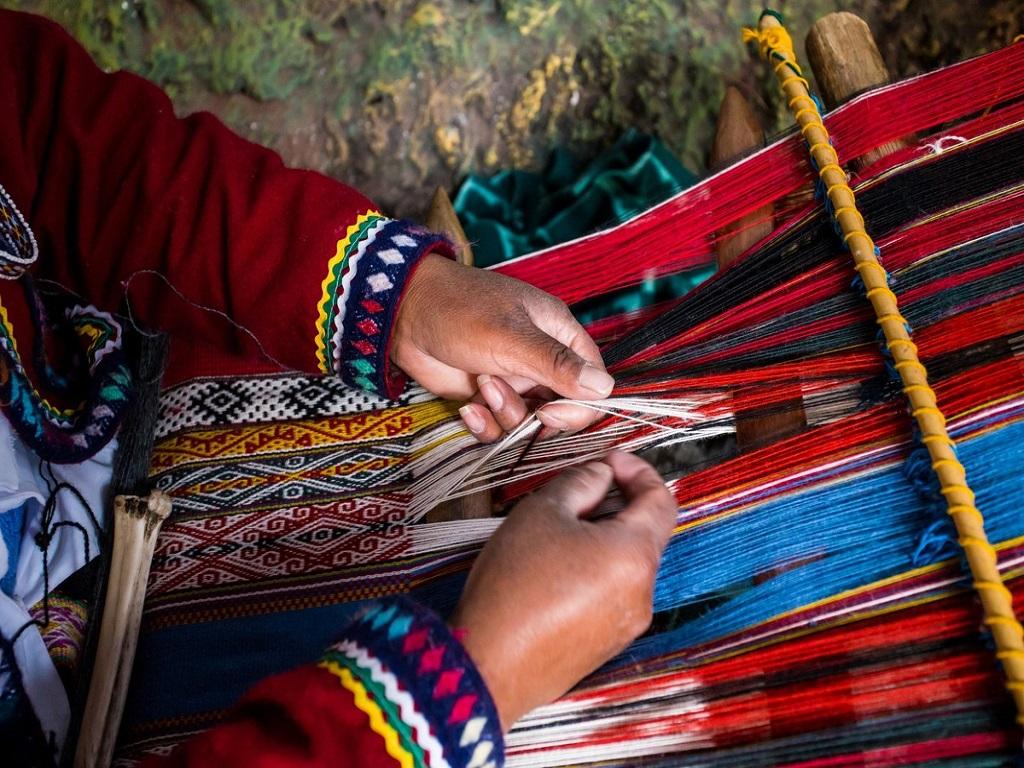
Indigenous textile traditions remain one of Bolivia’s most enduring artistic expressions.
Bolivia is populated by various indigenous groups such as the Aymara, Quechua, Guarani, and many other native peoples. Their artistic tradition has lasted for centuries amid all social and political transformations that have occurred during this time.
Indigenous textile manufacturing is still among the key ways of expressing themselves. Indigenous people from the Bolivian highlands produce hand-woven textiles which incorporate complex geometric designs, symbolism, and various natural colors.
However, these intricate designs represent much more than just ornaments. They symbolize storytelling, convey messages, express one’s social and even cultural standing, and carry a certain spiritual message behind them. Some patterns can be traced back hundreds of years ago because they have been handed down through generations of people.
Pottery, wood carving, metalwork, and ritual arts are some of the other forms of Bolivian art.
Colonial Influences and Religious Art
Spanish colonization in the 16th century brought European art influences to the area. Churches, monasteries, and other places of worship played a key role in artistic creation.
A new type of art emerged during this time. Indigenous artists incorporated European styles into their art while adding native symbols and perspectives.
In particular, the importance of religious paintings increased greatly. Artists made detailed paintings of saints, biblical events, and other sacred images. Yet, at the same time, these paintings were often infused with an Indigenous perspective as well.
Potosí grew to become one of the richest cities in the world because of the silver mines present there. The riches of Potosí helped establish churches, sculpture, paintings, and other forms of artwork that continue to stand out as fine colonial art in Bolivia.
One is able to view some of these masterpieces at Bolivian churches and museums.
The Rise of Modern Bolivian Art
The twentieth century brought about a remarkable change in Bolivian art. More and more Bolivian artists felt the need to create a distinctive national identity based on the indigenous background of the country.
The painters of the time turned their attention to issues of social justice and problems related to their country. They depicted the lives of native people and raised important political and social questions.
Among those who contributed greatly to this trend is Cecilio Guzmán de Rojas, whose paintings laid the foundations for the representation of indigenous life in Bolivian fine arts. In particular, he portrayed his heroes as strong, proud, and culturally valuable people.
Thus, the artists of the twentieth century created their unique national style.
Marina Núñez del Prado and the Transformation of Sculpture
There are few artists whose influence in Bolivian sculpture is comparable to that of Marina Núñez del Prado. One of the foremost sculptors of Latin America, she brought about a revolution in Bolivia’s artistic culture with her unique style and choice of materials.
Núñez del Prado was known for her sculptures focusing on themes of motherhood, femininity, nature, and Andean heritage. She used stone and bronze to create flowing organic shapes reflecting not only the latest artistic ideas but also indigenous culture.
Her work was inspired by mountain ranges, female strength, and natural rhythms. Through her sculptures, Núñez del Prado demonstrated that modern art can still be strongly connected with traditional art forms.
International success contributed greatly to drawing attention to the artistic talents of Bolivians and encouraged other sculptors.
Contemporary Indigenous Art and Cultural Revival
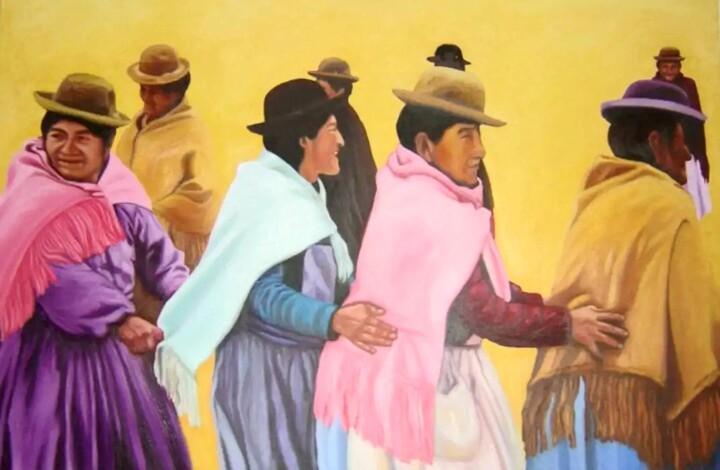
Murals bring art into public spaces and tell the story of Bolivia’s diverse cultural identity.
For many years now, the art community in Bolivia has embraced indigenous viewpoints with new vigor and confidence.
Bolivian artists like Roberto Mamani Mamani have become internationally recognized for their artistic representation of the Aymara people with the use of bright colors, symbols, and visual narratives.
Mamani Mamani’s paintings incorporate the presence of condors, sun, moon, traditional clothing, and indigenous families among other items. This creates beautiful artworks that depict respect and reverence for the artist’s ancestral past.
This artistic movement can be understood within the broader context of Bolivia’s efforts to acknowledge and embrace indigenous contribution to the nation.
Modern artists continue to be influenced by ancient wisdom and explore issues such as migration, environmental conservation, and cultural preservation.
Murals and Public Art: Art Beyond the Gallery
Public art holds great importance within Bolivia’s cultural setting. Murals transform urban areas into open-air galleries where people can enjoy art.
Many Bolivian artists have made outstanding mural paintings which reflect themes like history, social changes, and cultural identity. For example, Lorgio Vaca and Gil Imaná produced murals that featured workers, indigenous people, past events, and local customs.
These types of artworks have both aesthetic and instructional roles. They inspire people to learn about history as well as appreciate Bolivia’s cultural diversity.
Public art remains a popular art form, addressing current topics while still remaining connected to local culture.
Museums and Cultural Preservation
Museums play a vital role in preserving Bolivia’s artistic heritage. Institutions across the country protect ancient artifacts, colonial masterpieces, modern paintings, and contemporary works.
These collections help ensure that future generations can appreciate the artistic achievements of the past while supporting ongoing cultural education.
Preservation efforts are especially important as Bolivia seeks to protect archaeological sites, historic monuments, and traditional artistic practices from environmental and social pressures.
Through museums, cultural centers, and educational initiatives, Bolivia continues to safeguard its remarkable artistic legacy.
The Future of Bolivian Art
Bolivian art continues to evolve in exciting ways. Contemporary artists are experimenting with digital media, installation art, photography, and interdisciplinary approaches while remaining connected to cultural traditions.
Global interest in Indigenous perspectives has created new opportunities for Bolivian artists to reach international audiences. At the same time, local communities continue to preserve traditional artistic practices that have endured for centuries.
This balance between innovation and tradition ensures that Bolivian art remains both relevant and authentic.
As artists build upon the foundations established by ancient civilizations, colonial artisans, and modern pioneers, Bolivia’s creative future appears as vibrant as its remarkable past.
Notable Bolivian Artworks
- Gate of the Sun
- Bennett Monolith
- Ponce Monolith
- White Venus by Marina Núñez del Prado
- La Gesta del Oriente Boliviano mural
Museums to Visit
· National Museum of Art
· Tiwanaku Archaeological Site
Conclusion
The story of Bolivian art is a story of resilience, adaptation, and cultural continuity. From the monumental stone sculptures of Tiwanaku to the colorful murals and contemporary artworks of today, Bolivia’s artistic evolution reflects the enduring creativity of its people.
Its art serves as a bridge between past and present, connecting ancient traditions with modern expression. By exploring Bolivia’s artistic heritage, we gain insight into a nation whose identity has been shaped not only by history but also by the transformative power of creativity.
Whether through sculpture, painting, textiles, murals, or architecture, Bolivian artists continue to demonstrate that art remains one of the most powerful ways to preserve culture, tell stories, and inspire future generations.
Image Credits: Selected images sourced from Wikimedia Commons under Public Domain and Creative Commons licenses. Individual image credits provided where required.